
Getting back into your sketchbook
It’s “back to school” season, one of my favorite times of the year after a summer of languishing in the heat. School might bring up all sorts of negative connotations for you, but in its ideal form it is meant to be a safe place to learn.
You know what else is a safe place to learn? A sketchbook!
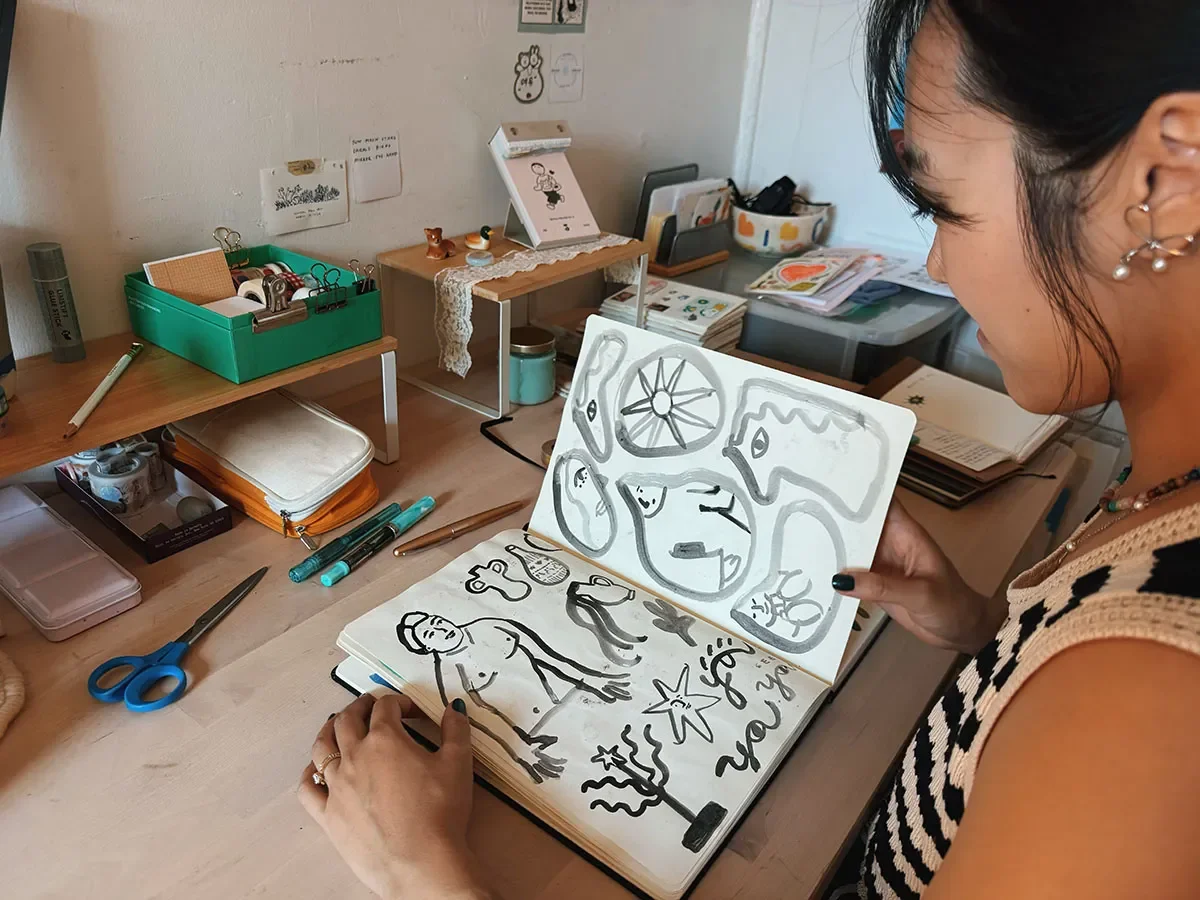
Sketchbooks are the ultimate tool for experimenting, exploring ideas, and practicing your art in a low-pressure environment. (I won’t say no pressure, because let’s be real, we are always giving ourselves lots of pressure in front of a blank page).
You can see a bunch of my past sketchbooks here—but you might have noticed, I haven’t been sharing much developmental sketchbook work lately. I’ve fallen off my sketchbook game this year, and I am determined to get back into it.
If you’re feeling the same, let’s begin with figuring out why we haven’t been using our sketchbooks.
Why aren’t you using your sketchbook?
Remember the creative archetypes? Each of the four archetypes has a distinct belief that often blocks them from making art in their sketchbook. Take the archetypes quiz if you’d like to refresh your memory on which type you are, then read on to see if it matches your situation:
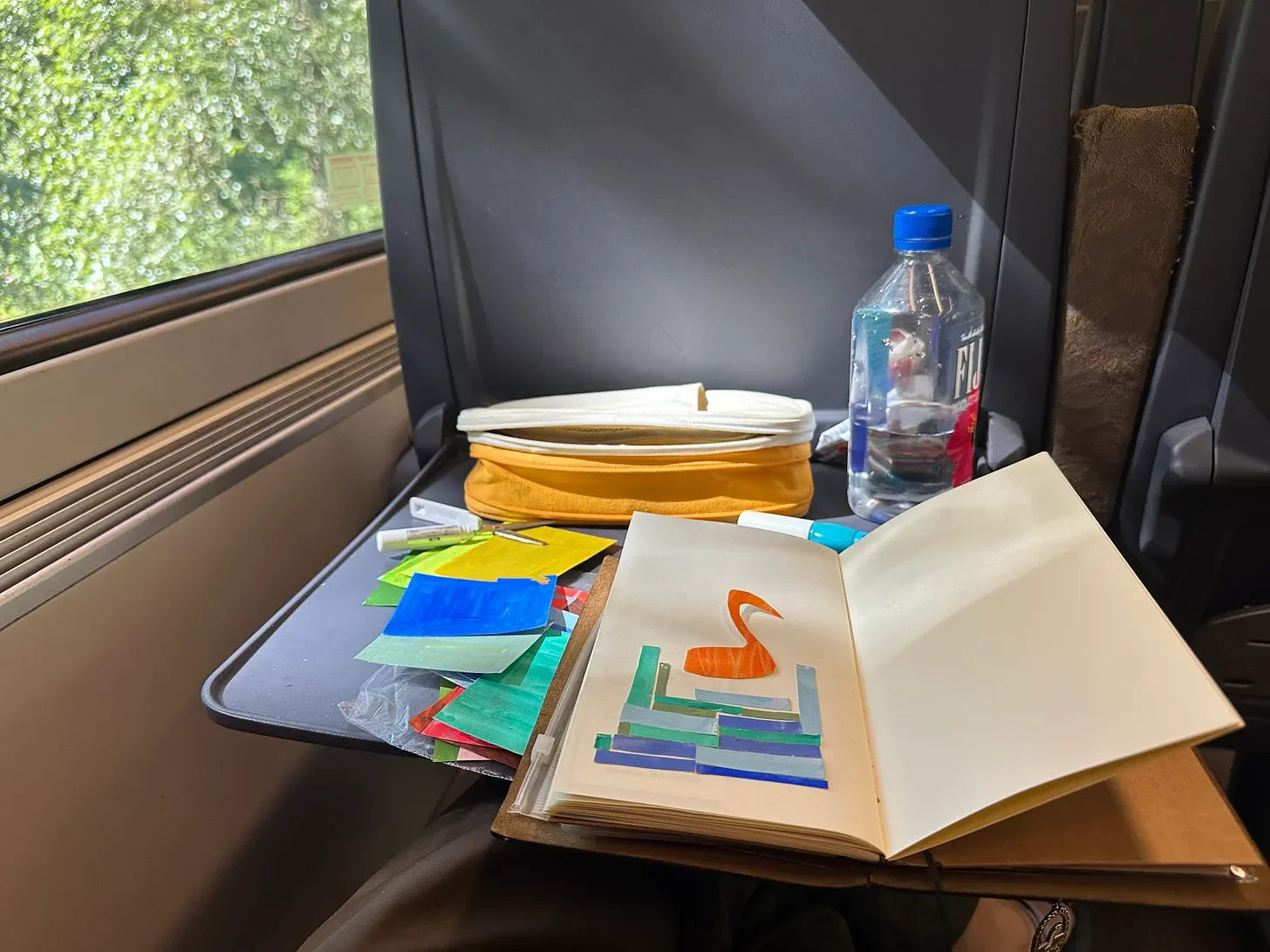
Strategists believe every art they make has to become an end product. If this is you, you are great at developing and finishing projects, but don’t make time to play! If you’re a Strategist feeling too blocked or tired to “work”, then you’re
Shapeshifters believe they need someone else to set their creative agenda. These are the folks who love group drawing sessions and classes where they can show up and create under someone else’s guidance. If you’re a Shapeshifter, your challenge is that once you’re out of that collective environment, you revert to not making stuff.
Visionaries believe they don’t know how to realize their abstract ideas. Cool concepts swirl in their minds but how will they ever bridge the gap between their fantasy and the reality of putting things onto paper? If you’re a Visionary, you’re attuned to your own thoughts but deathly scared of working things out on the page.
Voyagers believe life gets in the way of art. They’re busy living a vibrant, creative life but don’t often have time or energy to channel it onto paper. If you’re a Voyager, you find it tough to get back into practice after a season away.
Which reason resonates with you most? There might be a clear standout—for example, you may have been running around traveling and taking care of kids on summer break so you know that it’s everyday life that’s gotten in your way. Or you might recall how you had open patches of time for you to play in your sketchbook, but you felt overwhelmed by the thought of doing it on your own.
Whatever your reasons are (it could be all of them), hold them lightly in your thoughts without beating yourself up about it. Remember that making art is a lifelong practice. Your life ebbs and flows as it shapes itself around momentous and infinitesimal changes. The same goes for your art!
Reflect before you try again
Before you jump into using your sketchbook with feelings of guilt or pressure, it’s important to get a better sense of your reasons and motives. A fear-based action might work today, but it is not going to last!
I don’t want you to vow to use your sketchbook just because somebody who seems like a successful artist tells you to. Why do you want to? Take a few minutes to reflect on the prompts below:
What keeps you from using your sketchbook? Refer to the four reasons in the last section if you’re stuck!
How did not using your sketchbook serve you & your life in the past?
Why do you want to use your sketchbook now?
Here are my own answers to give you a sense of what this reflection might look like:
My reasons for barely using my sketchbook are a combination of not knowing how to realize my ideas (a Visionary problem) and feeling compelled to make art for an end product (a Strategist problem).
I actually stepped back from centering my practice around my sketchbook so I could write and make more project-based work. In the past I focused on drawing from life in my sketchbooks, which was useful practice, but I found it hard to develop my own visual vocabulary if I only focused on observational drawing. I didn’t really know how to bridge this gap so I put my sketchbooks aside and turned to more creative journaling instead.
I want to use my sketchbook again because I miss painting. I am eager to use more color! I also want to develop more of an abstract, graphic language to incorporate into my work.
Tips for each Archetype
For the Strategist
If you’re a planner and organization lover who thrives under a deadline, you might be a Strategist. Maintaining a sketchbook practice can be tough when you’re focused on clear-cut deliverables, but the very play that sketchbooks provide is what’s going to fuel your next big idea!
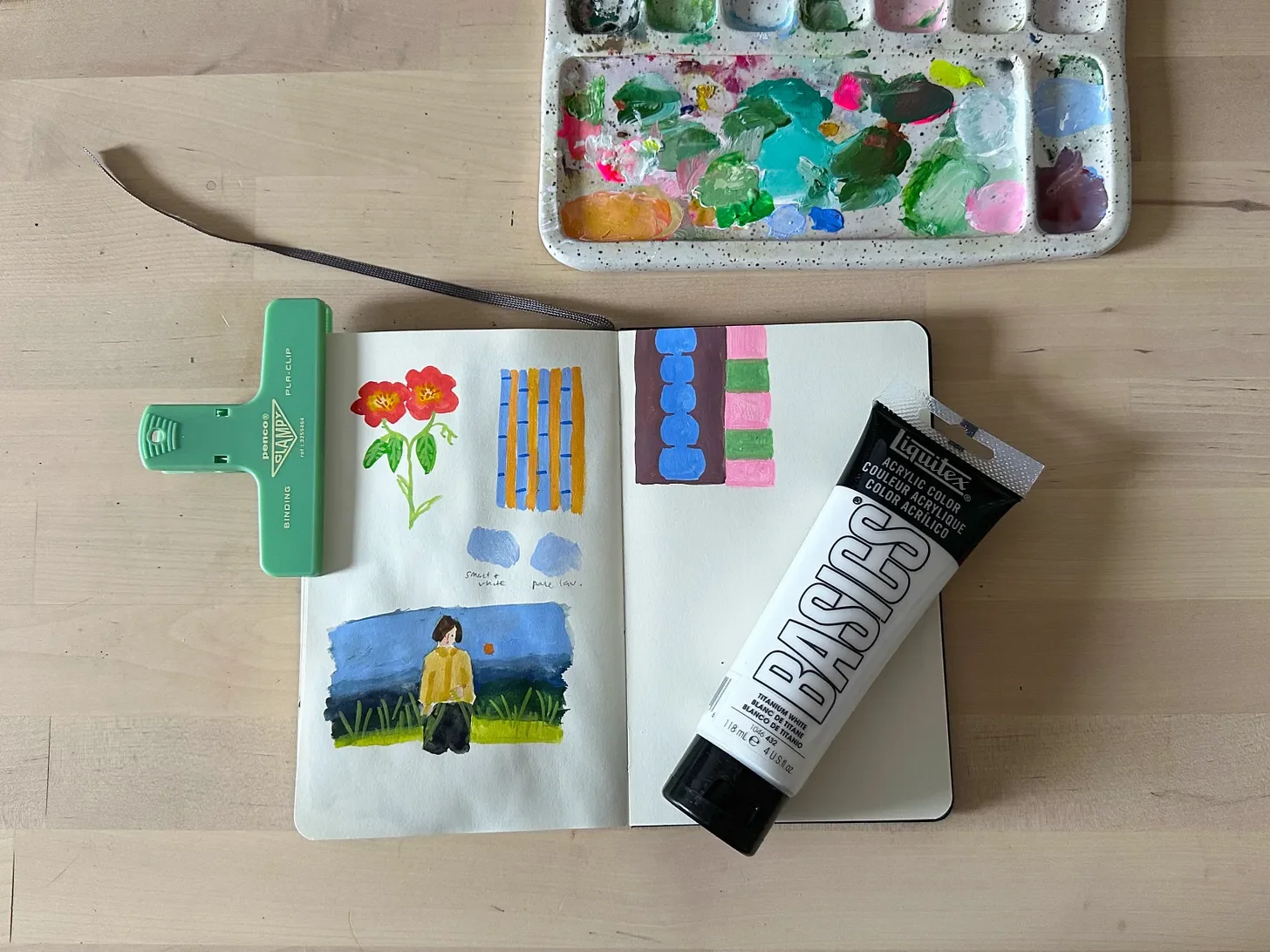
I recommend that Strategists add time constraints to get back into their sketchbook. The most obvious way to tackle this is to set a Pomodoro timer for 25 minutes, or whatever your minimum creative time is, and don’t stop playing in your sketchbook until the timer’s up.
If you already know you’re the type of person to reply to all your emails, wash the dishes, and even clean the dust bunnies on your baseboards before giving yourself a creative time-out, try adding other levers of constraints.
One tactic that I’ve been experimenting with is working with a faster-drying material like acrylic paint. I usually work from gouache pan paints, which are both easy to start using (yay!) and to stop using (nay!) Nowadays I squeeze out a big glob of white acrylic paint to mix my gouache with, which compels me to sit and paint until my paints are all used up. Otherwise the paint will dry on my palette and will never be used by anyone!
If you are struggling with incorporating time constraints, ask yourself: What do you dislike more than the discomfort of trying? I hate wasting materials, which is why adding “waste-able” materials like acrylic works well in my current practice. You might hate disappointing others, so committing to a sketchbook session with a friend might work best for you.
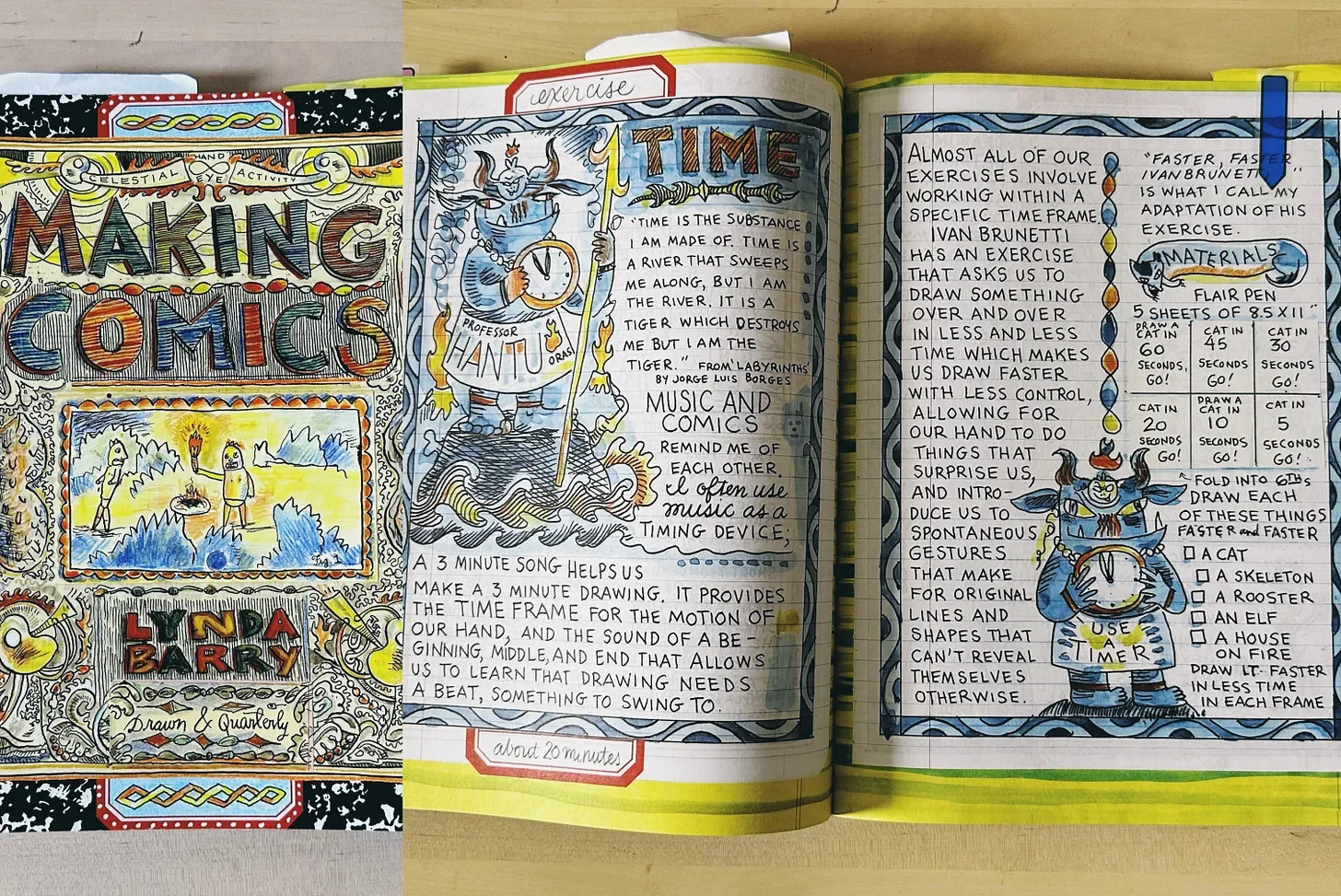
My book rec for Strategists is Making Comics by Lynda Barry. There’s a fantastic Time exercise that Lynda uses with her students. Here’s an abbreviated version of the exercise if you’d like to try it:
Get a pen and a sheet of letter sized paper. Fold the paper into sixths. In the first quadrant, draw a cat in 60 seconds. In the second, draw the cat in 45 seconds. Then draw a cat in 30, 20, 10, and 5 seconds to fill up the remaining quadrants.
For the Shapeshifter
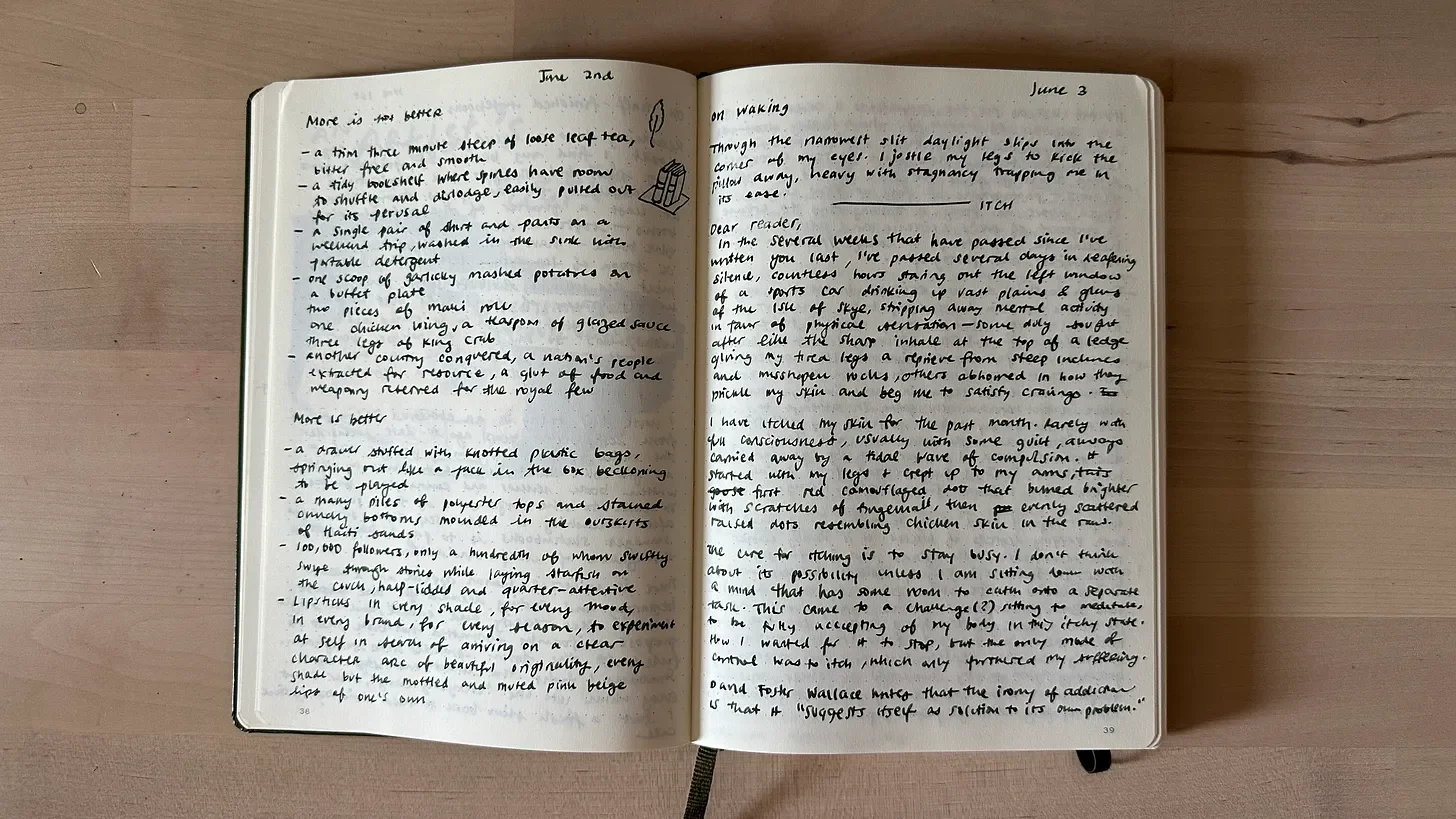
Shapeshifters of the world love to try on different hats and experiment. Funnily enough, the sketchbook is the place to do this experimentation—but with too much sway from external influence and inspiration, the Shapeshifter can easily get lost in the noise.
For the Shapeshifters, I recommend weaving in journaling with your sketchbook practice. This can look like a morning pages practice before jumping into artmaking, or a visual journaling practice where daily records and sketches live side by side.
Journaling will help bring more of you into your artwork. What’s frustrating about finding your voice and style is that there will never be an “aha” moment, when all of your work suddenly appears to be uniquely yours. Instead the process is gradual and intuitive, starting with listening to the self through the quiet act of journaling.
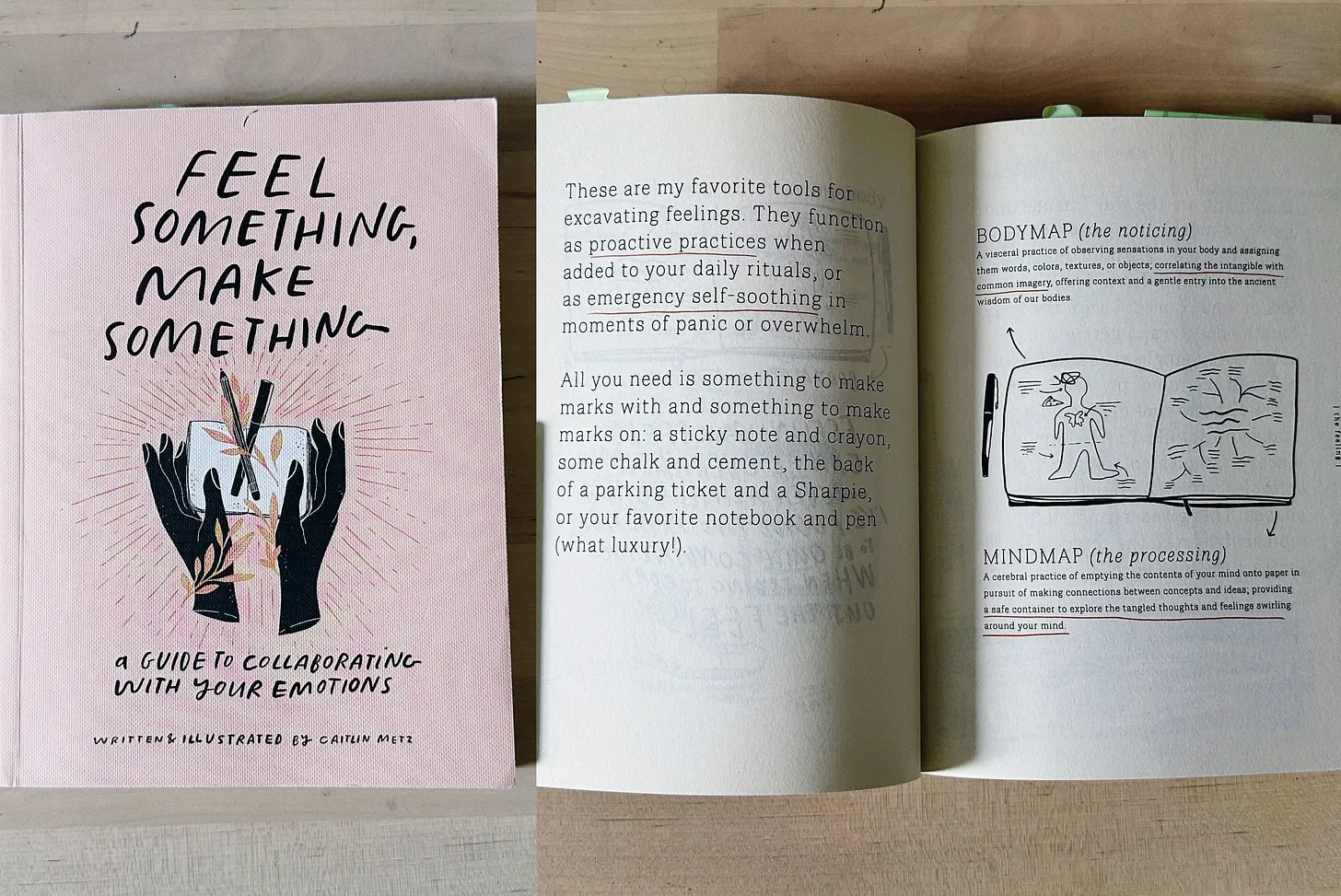
My book rec for Shapeshifters is Feel Something, Make Something by Caitlin Metz. This book is all about bringing your emotions into your practice, starting with body maps and mind maps. These can be amazing alternatives to journaling when you’re feeling especially overwhelmed.
For the Visionary
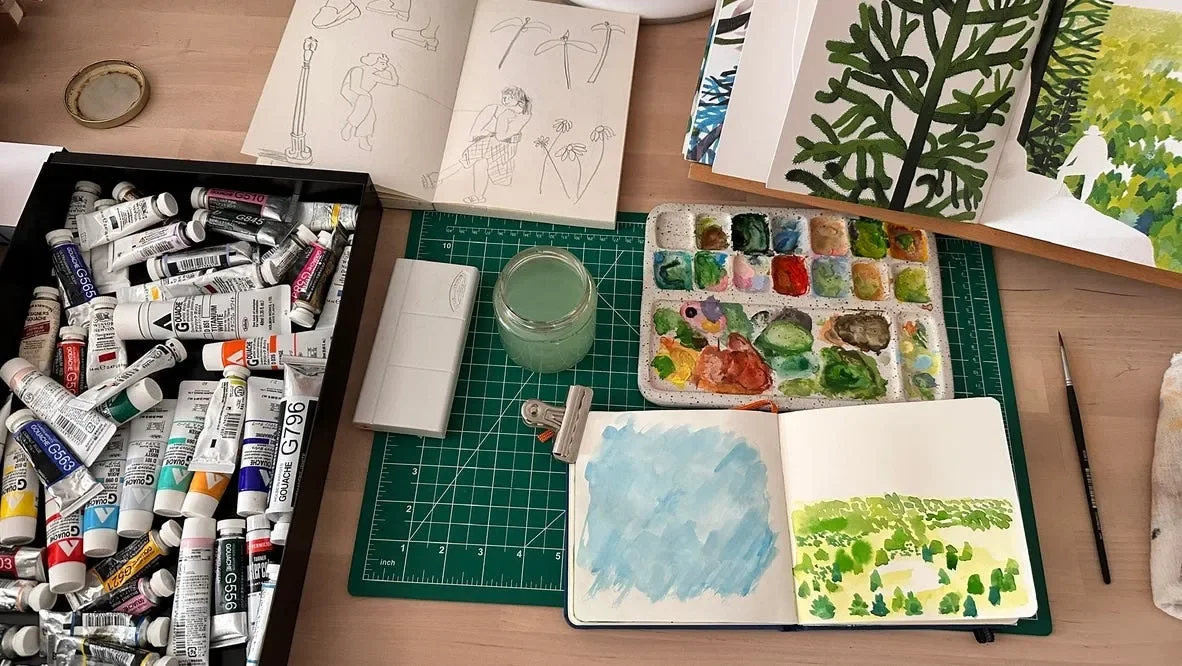
If you love to ponder concepts and delve into abstract worlds, you might be a Visionary. Big picture thinkers such as the Visionary love brainstorming and mind mapping, but the actual work of bringing concepts to life remains a challenge.
To get over this hurdle and actually make marks in a sketchbook, I recommend Visionaries start by reproducing work. Yes, that means copying! Bring out your favorite books, paintings, and posters and replicate their colors, patterns, and compositions. What draws you to the art you love? Make that question your entry point into your sketchbook.
Remember, the practice of copying in your private sketchbook isn’t “cheating”—it’s a crucial step for learning! As Eleanor Stern puts it in her post on learning through reproduction:
The preference for productive over reproductive knowledge assumes that only in the process of production do we internalize knowledge, making it part of ourselves. But when knowledge is reproduced lovingly, it becomes inextricable from the embodied processes of its reproduction.
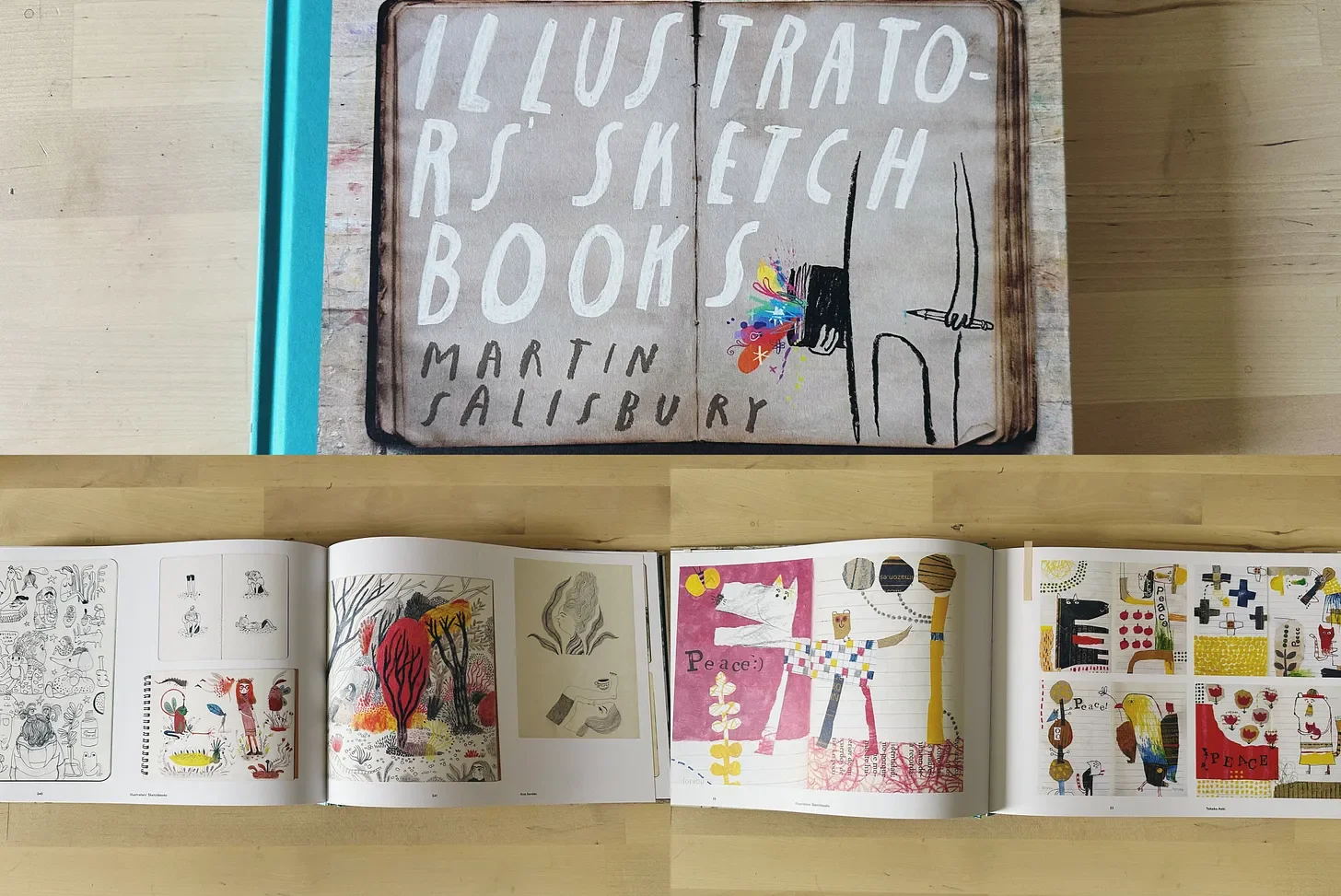
My book rec for Visionaries is Illustrators’ Sketchbooks by Martin Salisbury. This tome is a real treasure trove of inspiration, compiling sketchbooks of 60 historical and contemporary illustrators worldwide. There’s a delightful range of realistic to abstract art in here, and it reminds me there’s no one right way to use a sketchbook. Many of the artists don’t even carry their sketchbook around!
For the Voyager
Voyagers value living a full creative life, the scope of which expands far beyond creative work. Their constant question is how to keep going amidst life’s demands and responsibilities.
This type enjoys documenting their life and memories, which is a perfect use for a sketchbook. I recommend that Voyagers streamline the setup in order to lower the barrier to entry to using one’s sketchbook on any given day.
In practice, this can look like carrying a small pocket notebook and a gel pen in your everyday purse. You could also consider having multiple sketchbooks in various convenient places—in the glove box of the car, on your kitchen table, on your nightstand.
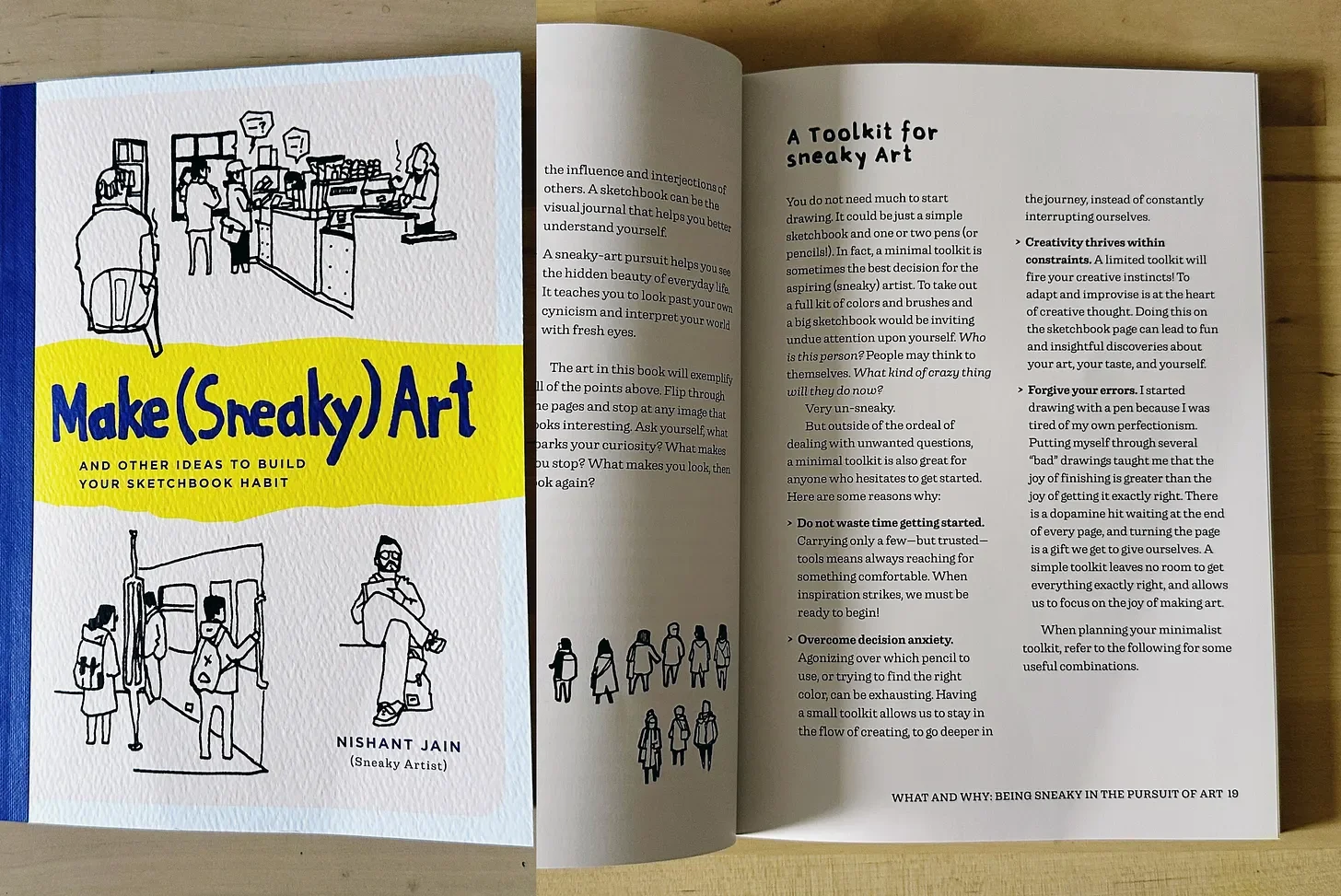
My book rec for Voyagers is Make (Sneaky) Art by Nishant Jain, which publishes next week! Nishant recommends a minimal toolkit for making his trademark “sneaky art”, which helps to not waste time getting started, overcome decision anxiety, and encourage forgiveness for making mistakes.
Here are Nishant's three minimal toolkit suggestions:
One trusted pen for linework, up to two tools for colors
One primary pen with two fineliners (one thin, one thick)
Three colored pencils—a warm, cool, and a bold highlight